International Journal of Nanomaterials, Nanotechnology and Nanomedicine
Self-Assembly as a Technique for Peptide-Based Materials
National Key Laboratory of Biochemical Engineering, Institute of Process Engineering, Chinese Academy of Sciences, Beijing 100190, China
Author and article information
Cite this as
Wang J, Yan X (2015) Self-Assembly as a Technique for Peptide-Based Materials. Int J Nanomater Nanotechnol Nanomed. 2015; 1(1): 11-13. Available from: 10.17352/2455-3492.000003
Copyright License
© 2015 Wang J, et al. This is an open-access article distributed under the terms of the Creative Commons Attribution License, which permits unrestricted use, distribution, and reproduction in any medium, provided the original author and source are credited.Molecular self-assembly is a key function in biology and has been developed as an elegant technique for fabrication of various complex structures and functional materials. Key importance for structural formation in terms of self-assembly is molecular recognition pertaining to intermolecular weak interactions such as hydrophobic interactions, hydrogen bonds, π-π stacking, electrostatic forces and dipole-dipole interactions etc. A combination of several kinds of such weak interactions can govern molecular organization and thus ordered supramolecular architectures. Among molecular building blocks are the bioinspired and bioderived molecules including peptides and proteins. Peptides consisting of several amino acids are most popular over decades for development of molecular biomaterials owing to ease of availability, programmable molecular motif, biocompatibility and biodegradation, flexible functionality and low cost-effectiveness. The nanostructures and materials assembled using peptides as building blocks have presented an important potential for green-life new technology and biomedical applications. In this opinion, self-assembly and application of several kinds of peptides including aromatic dipeptides, polypeptides, amphiphilic peptides, lipopeptides, and inorganic-hybridized peptide will be stated briefly.
Molecular self-assembly is a key function in biology and has been developed as an elegant technique for fabrication of various complex structures and functional materials. Key importance for structural formation in terms of self-assembly is molecular recognition pertaining to intermolecular weak interactions such as hydrophobic interactions, hydrogen bonds, π-π stacking, electrostatic forces and dipole-dipole interactions etc. A combination of several kinds of such weak interactions can govern molecular organization and thus ordered supramolecular architectures. Among molecular building blocks are the bioinspired and bioderived molecules including peptides and proteins. Peptides consisting of several amino acids are most popular over decades for development of molecular biomaterials owing to ease of availability, programmable molecular motif, biocompatibility and biodegradation, flexible functionality and low cost-effectiveness. The nanostructures and materials assembled using peptides as building blocks have presented an important potential for green-life new technology and biomedical applications. In this opinion, self-assembly and application of several kinds of peptides including aromatic dipeptides, polypeptides, amphiphilic peptides, lipopeptides, and inorganic-hybridized peptide will be stated briefly.
Aromatic dipeptides
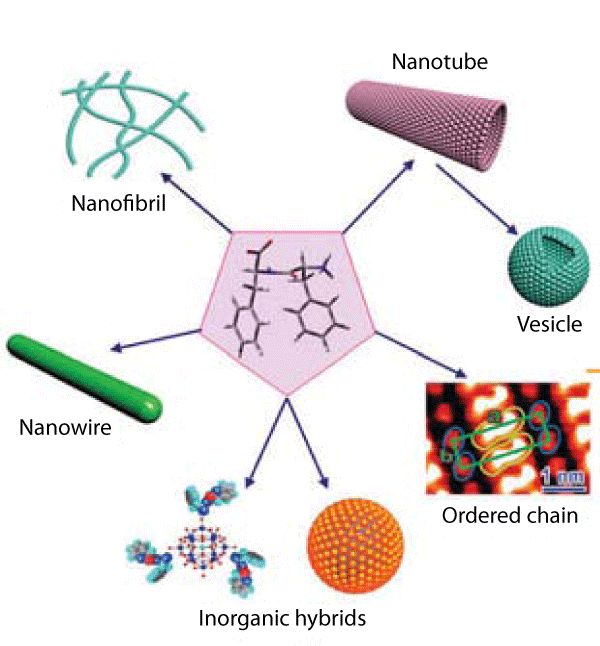
Diphenylalanine (FF), which is extracted from Alzheimer’s β-amyloid polypeptide, is one of the simplest and most common used recognition motifs for molecular self-assembly [1]. It is known that FF as well as its derivatives can assemble into various nanostructures including nanotubes [1,2], nanofibrils [3,4], ribbons, nanowires [5], spherical vesicles [6], and so on (Figure 1). These morphology of FF nanostructures can be controlled, interconverted [6] and affected by parameters, e.g. solvent conditions [3] and temperature [7]. Especially, because of their unique physical and chemical properties, the development and potential application of FF nanotubes have been rapid growth [8]-[11]. For example, nanotubes and nanospheres in solutions can be used as ink and patterned on ITO plastic surfaces [12]. Recently, various functional FF nanotubes with photoluminescent [13], fluorescent [14], and piezoelectric activity [15] are reported. The studies of FF fibrils and ribbons are essential since the formation of FF fibrils is ubiquitous and relevant to diseases such as Alzheimer’s disease. In addition, FF organogels formed by FF fibrils are novel soft materials, having potential applications in drug delivery, cell culturing [16]-[18] and energy materials [19]-[21]. The mechanical properties of organogels are the key technique problems that needed to improve for applications.
Amphiphilic peptides
Amphiphilic peptide (AP), which behaves in some respects like amphiphilic surfactants, is a class of molecule that consists of a hydrophilic peptide segment and a hydrophobic domain. In water, these molecules generally self-assemble into rods with a hydrophobic core. The peptide segments outside the hydrophobic core always prefer a β-sheet conformation. As introduced in the latest reviews [23,24], the self-assembly of AP are mainly controlled by the balance between hydrophilic and hydrophobic segments, and influenced by parameters such as temperature, pH, lights, and so on. Therefore, many pH-responsive [25], temperature-responsive [26], UV light-responsive and enzymes-responsive [27] materials have been developed and applied, and some of these are already in commercial use, e.g. in skincare products [28].
Lipopeptides
Lipopeptide can be treated as a special type of AP, and the hydrophoic tail of lipopeptide has a similar structure as the lipid. Therefore, when lipopeptide molecules are exposed to water, vesicle-like structures can be spontaneously formed by self-assembly. These vesicles have potential application in drugs and genes delivery [29]-[32]. For example, the vesicles formed by a multivalent cationic lipopeptide has a binding affinity with DNA and expected to be a new type of gene transfection reagents [30].
Polypeptides
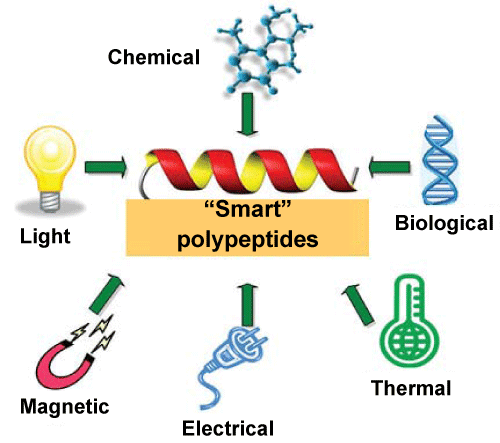
Synthetic polypeptide (PP) is a kind of polymer that polymerized by amino acids molecules, and the self-assemble properties of PP are determined by its amino acid segments. PP molecule is a perfect combination of flexible polymer and amino acid. The polymerization techniques significantly develop the stimuli-responsive of amino acids (Figure 2) [33]. Moreover, comparing to the low weight FF-based organogels, the mechanical strength of PP-based organogels can be dramatically increased. On the other hand, by layer-by-layer assembly technique, a polypeptide multilayer film can be fabricated on solid substrate and applied in bionanotechnology such as cell and tissue culture [17,34], immunogenicity control [35], antimicrobial films [36], and so on. The vesicles and particles assembled by PP can load drug molecules and be used for drug delivery [37]-[40].
Peptide-inorganic hybrids
The interventions of inorganic functional materials, including polyoxometalates (POMs), nanocrystals, and nanoparticles, will provide unique electronic, catalytic, photonic properties to peptides. For example, the hybrids combined of a cationic dipeptide and a Keggin-type POM exhibit spherical nanostructures through strong electrostatic interactions and further multiple noncovalent interactions [41]. These hybrids, which showing unique pH and temperature responsive, can be applied in controlled release of drugs. By using FF-based organogels as candidate, quantum dots (QDs) can be entrapped [42]. Thus hybrid gels with various electronic, optical, and magnetic properties can be achieved.
Peptides assembled on the surfaces
The materials fabricated by ordered peptides assembled on various surfaces or substrates such as Si [43,44], Cu [45], gold [46]-[48], and polymer [49] are also attractive because of their potential applications in bionanotechnology and biosensing devices. The assembly of peptides on surfaces benefit the studies on single-molecule level [50], and development of two-dimensional materials.
Summary and Outlook
Molecular self-assembly is an interdisciplinary research field involving chemistry, materials science, life science and physics so on. Self-assembly, as a "bottom-up" technique starting from molecular units, provides a powerful tool to obtain various biologically-based materials with potential applications. It has been demonstrated that different architectures including nanofibers, nanotubes, spherical vesicles and ribbons can be formed through peptide self-assembly. They show a significant potential for biomedical applications such as drug delivery, biosensors and tissue engineering. However, the studies in this field are still in its infancy. The development of peptide-based materials is yet challenging but exciting. The systematic understanding on governing mechanisms for self-assembly and the translation into practical industrial uses are needed and appreciated. Breakthrough in these research topics will surely promote the development of peptide-based materials, in turn which will motivate the activity for developing molecular self-assembly as a technique for preparation of new types of green, ecologically friendly and smart materials.
- Reches M, Gazit E (2003) Casting metal nanowires within discrete self-assembled peptide nanotubes. Science 300: 625-627 .
- Görbitz CH (2006) The structure of nanotubes formed by diphenylalanine, the core recognition motif of Alzheimer's β-amyloid polypeptide. Chem Commun: 2332-2334 .
- Zhu P, Yan X, Su Y, Yang Y, Li J (2010) Solvent-Induced Structural Transition of Self-Assembled Dipeptide: From Organogels to Microcrystals. Chem Eur J 16: 3176-3183 .
- Cherny I, Gazit E (2008) Amyloids: Not only pathological agents but also ordered nanomaterials. Angew Chem Int Ed 47: 4062-4069 .
- Kim J, Han TH, Kim YI, Park JS, Choi J, et al. (2010) Role of Water in Directing Diphenylalanine Assembly into Nanotubes and Nanowires. Adv Mater 22: 583-587 .
- Xuehai Yan, Yue Cui, Qiang He, Kewei Wang, Junbai Li, et al. (2008) Reversible transitions between peptide nanotubes and vesicle-like structures including theoretical modeling studies. Chem Eur J 14: 5974-5980 .
- Handelman A, Natan A, Rosenman G (2014) Structural and optical properties of short peptides: nanotubes-to-nanofibers phase transformation. J Pept Sci 20: 487-493 .
- Gao XY, Matsui H (2005) Peptide-based nanotubes and their applications in bionanotechnology. Adv Mater 17: 2037-2050 .
- Seabra AB, Duran N (2013) Biological applications of peptides nanotubes: An overview. Peptides 39: 47-54 .
- Valery C, Artzner F, Paternostre M (2011) Peptide nanotubes: molecular organisations, self-assembly mechanisms and applications. Soft Matter 7: 9583-9594 .
- Scanlon S, Aggeli A (2008) Self-assembling peptide nanotubes, Nano Today 3: 22-30 .
- Adler-Abramovich L, Gazit E (2008) Controlled patterning of peptide nanotubes and nanospheres using inkjet printing technology. J Pept Sci 14: 217-223 .
- Ryu J, Lim SY, Park CB (2009) Photoluminescent Peptide Nanotubles. Adv Mater 21: 1577-1581 .
- Na N, Mu X, Liu Q, Wen J, Wang F, et al. (2013) Self-assembly of diphenylalanine peptides into microtubes with "turn on" fluorescence using an aggregation-induced emission molecule. Chem Commun 49: 10076-10078 .
- Kholkin A, Amdursky N, Bdikin I, Gazit E, Rosenman G (2010) Strong Piezoelectricity in Bioinspired Peptide Nanotubes. Acs Nano 4: 610-614 .
- Mahler A, Reches A, Rechter M, Cohen S, Gazit E (2006) Rigid, self-assembled hydrogel composed of a modified aromatic dipeptide. Adv Mater 18: 1365-1370 .
- He B, Yuan X, Wu J, Bai Y, Jiang DM (2015) Self-Assembling Peptide Nanofiber Scaffolds for Bone Tissue Engineering. Science of Advanced Materials 7: 1221-1232 .
- Jayawarna V, Ali M, Jowitt TA, Miller AE, Saiani A, et al. (2006) Nanostructured hydrogels for three-dimensional cell culture through self-assembly of fluorenylmethoxycarbonyl-dipeptides. Adv Mater 18: 611-614.
- Fichman G, Gazit E (2014) Self-assembly of short peptides to form hydrogels: Design of building blocks, physical properties and technological applications. Acta Biomater 10: 1671-1682 .
- Eleanor K. Johnson, Dave J. Adams, Petra J (2011) Cameron, Peptide based low molecular weight gelators. J Mater Chem 21: 2024-2027 .
- Ajayaghosh A, Praveen VK, Vijayakumar C (2008) Organogels as scaffolds for excitation energy transfer and light harvesting. Chem Soc Rev 37: 109-122 .
- Yan X, Zhu P, Li J (2010) Self-assembly and application of diphenylalanine-based nanostructures. Chem Soc Rev 39: 1877-1890 .
- Dehsorkhi A, Castelletto V, Hamley IW. (2014) Self-assembling amphiphilic peptides. J Pept Sci 20: 453-467 .
- Tang C, Qiu F, Zhao X (2013) Molecular Design and Applications of Self-Assembling Surfactant-Like Peptides. J Nanomaterials .
- Dehsorkhi A, Castelletto V, Hamley IW, Adamcik J, Mezzenga R (2013) The effect of pH on the self-assembly of a collagen derived peptide amphiphile. Soft Matter 9: 6033-6036.
- Hamley IW, Dehsorkhi A, Castelletto V, Furzeland S, Atkins D, et al. (2013) Reversible helical unwinding transition of a self-assembling peptide amphiphile. Soft Matter 9: 9290-9293 .
- Hughes M, Debnath S, Knapp CW, Ulijn RV (2013) Antimicrobial properties of enzymatically triggered self-assembling aromatic peptide amphiphiles. Biomaterials Science 11: 1138-1142 .
- Lupo MP, Cole AL (2007) Cole, Cosmeceutical peptides. Dermatol Therapy 20: 343-349 .
- Weyland M, Griveau A, Bejaud J, Benoit JP, Coursaget P, et al. (2013) Lipid nanocapsule functionalization by lipopeptides derived from human papillomavirus type-16 capsid for nucleic acid delivery into cancer cells. Int J Pharm 454: 756-764 .
- Wang K, Yan X, Cui Y, He Q, Li J. (2007) Synthesis and in vitro behavior of multivalent cationic lipopeptide for DNA delivery and release in HeLa cells. Bioconjugate Chem 18: 1735-1738 .
- Sebyakin YL, Budanova UA (2006) [pH-sensitive cationic lipopeptides for the design of drug-delivery systems] J Bioorg Chem 32: 453-458 .
- Viola JR, Strömberg R, Simonson OE, Andaloussi SE, Smith CI, et al. (2012) Diaminopropionic acid lipopeptides: Characterization studies of polyplexes aimed at pDNA delivery. Bioorg Med Chem Lett 22: 5635-5638 .
- Huang J, Heise A (2013) Stimuli responsive synthetic polypeptides derived from N-carboxyanhydride (NCA) polymerisation. Chem Soc Rev 42: 7373-7390 .
- Picart C, Elkaim R, Richert L, Audoin T, Arntz Y, et al. (2005) Primary cell adhesion on RGD-functionalized and covalently crosslinked thin polyelectrolyte multilayer films. Adv Funct Mater 15: 83-94 .
- Haynie DT, Palath N, Liu Y, Li BY, Pargaonkar N (2005) Biomimetic nanostructured materials: Inherent reversible stabilization of polypeptide microcapsules. Langmuir 21: 1136-1138 .
- Etienne O, Picart C, Taddei C, Haikel Y, Dimarcq JL, et al. (2004), Multilayer polyelectrolyte films functionalized by insertion of defensin: A new approach to protection of implants from bacterial colonization. Antimicrob Agents Chemother 48: 3662-3669 .
- Bellomo EG, Wyrsta MD, Pakstis L, Pochan DJ, Deming TJ (2004) Stimuli-responsive polypeptide vesicles by conformation-specific assembly. Nature Materials 3: 244-248 .
- de Miguel L, Popa I, Noiray M, Caudron E, Arpinati L, et al. (2015) Osteotropic Polypeptide Nanoparticles with Dual hydroxyapatite Binding Properties and Controlled Cisplatin Delivery. Pharm Res 32: 1794-803 .
- Saxena R, Nanjan MJ (2015) Elastin-like polypeptides and their applications in anticancer drug delivery systems: a review. Drug Deliv 22: 156-167 .
- Holowka EP, Sun VZ, Kamei DT, Deming TJ (2007) Polyarginine segments in block copolypeptides drive both vesicular assembly and intracellular delivery. Nature Materials 6: 52-57 .
- Yan X, Zhu P, Fei J, Li J (2010) Self-Assembly of Peptide-Inorganic Hybrid Spheres for Adaptive Encapsulation of Guests. Adv Mater 22: 1283-1287 .
- Yan X, Cui Y, He Q, Wang K, Li J (2008) Organogels based on self-assembly of diphenylalanine peptide and their application to immobilize quantum dots. Chem Mater 20: 1522-1526 .
- Ryu J, Park CB (2008) High-Temperature Self-Assembly of Peptides into Vertically Well-Aligned Nanowires by Aniline Vapor. Adv Mater 20: 3754-.
- Hnilova M, Christopher R. So, Oren E E, Wilson BR, Kacar T, et al. (2012) Peptide-directed co-assembly of nanoprobes on multimaterial patterned solid surfaces. Soft Matter 8: 4327-4334 .
- Lingenfelder M1, Tomba G, Costantini G, Colombi Ciacchi L, De Vita A, et al. (2007) Tracking the chiral recognition of adsorbed dipeptides at the single-molecule level. Angew Chem Int Ed 46: 4492-4495 .
- Dugger JW, Webb LJ (2015) Fibrillar Structures Formed by Covalent ly Bound, Short, beta-Stranded Peptides on Self-Assembled Monolayers. Langmuir 31: 3441-3450 .
- Yokoyama K, Miller-Rhodes P, Chung K (2014) Reversible self-assembly of a-synuclein peptide on gold colloidal nanoparticles' surfaces, Abstracts of Papers of the American Chemical Society 248.
- Kim B, Choi SJ, Han SH, Choi KY, Lim YB (2013) Stabilization of alpha-helices by the self-assembly of macrocyclic peptides on the surface of gold nanoparticles for molecular recognition. Chem Commun 49: 7617-7619 .
- Go DP, Hung A, Gras SL, O'Connor AJ (2012) Use of a Short Peptide as a Building Block in the Layer-by-Layer Assembly of Biomolecules on Polymeric Surfaces. J Phys Chem B 116: 1120-1133 .
- Yang Y, Wang C (2013) Single-molecule studies on individual peptides and peptide assemblies on surfaces. Philos Trans A Math Phys Eng Sci 371.



 Save to Mendeley
Article Alerts
Subscribe to our articles alerts and stay tuned.
 This work is licensed under a Creative Commons Attribution 4.0 International License.