Corrosion Induced by APB Acid-Producing Bacteria Isolated from an Oil Field in Southern Algeria
Corrosion and Protection Expert, Gas, Refining, and Petrochemicals Department, Algerian Petroleum Institute, SONATRACH Company, Algeria
Author and article information
Cite this as
Khoukhi F. Corrosion Induced by APB Acid-Producing Bacteria Isolated from an Oil Field in Southern Algeria. Open J Chem. 2026; 12(1): 4-8. Available from: 10.17352/ojc.000046
Copyright License
© 2026 Khoukhi F. This is an open-access article distributed under the terms of the Creative Commons Attribution License, which permits unrestricted use, distribution, and reproduction in any medium, provided the original author and source are credited.This study examines industrial corrosion caused by acid-producing bacteria isolated from the filters of a water separation facility at an oil field in southern Algeria.
This water is used for injection to maintain reservoir pressure.
An on-site monitoring system was implemented using a bioprobe and corrosion coupons, with findings subsequently validated through laboratory testing and analysis.
The study investigates the behavior of carbon steel in the presence of acid-producing bacteria (APB) over a 45-day immersion period; scanning electron microscopy revealed biofilm formation and localized corrosion zones on steel coupons immersed in APB-contaminated injection water treated with a biocide.
One of the major causes of damage on the metal structures in oil and gas production systems is microbiologically influenced corrosion (MIC). Acid-producing bacteria (APB) are key contributors to localized corrosion among the microorganisms linked to MIC, generating organic and inorganic acids that accelerate metal degradation. Water injection systems are especially vulnerable because they provide moisture, nutrients and good conditions for microbial growth.
Carbon steel is the most widely used material for pipelines and water injection facilities, owing to its good mechanical properties and low cost. However, prolonged immersion in APB contaminated environments results in biofilm formation, leading to severe pitting corrosion and reduced service life.
Different monitoring techniques such as microbiological analysis, corrosion coupons, scanning electron microscopy (SEM) and weight-loss measurements have been used to evaluate microbiological corrosion. A key strategy for controlling bacterial growth and reducing corrosion is effective biocide treatment.
The aim of this work is to study the corrosion induced by acid producing bacteria (APB) in an oilfield water injection plant located in the south of Algeria. It studies bacterial growth, physicochemical properties of the injection water, corrosion behavior of carbon steel and the efficacy of different biocide concentrations on microbial corrosion.
Experimental section
Results and discussion
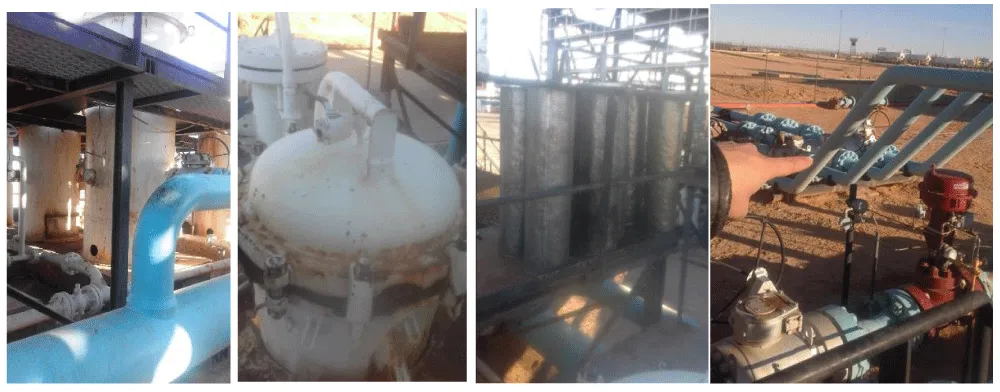
Bacterial strains were sampled and isolated from the filters at the water separation facility of an oil field in southern Algeria.
Sampling was conducted in accordance with the ASTM D3370-2018 standard [1].
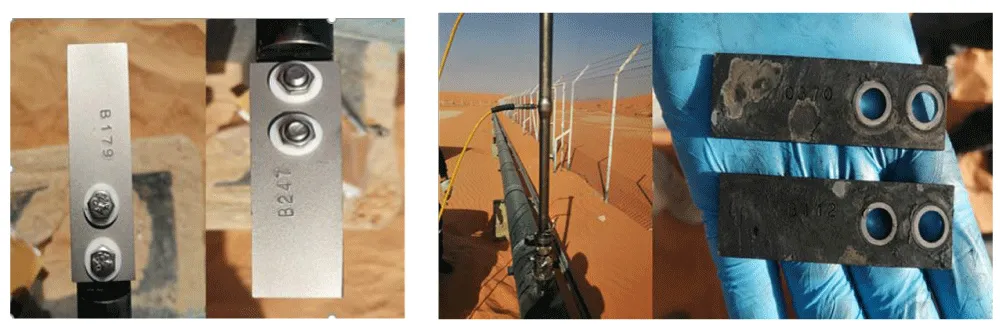
Below are photos of the water injection facilities where the APB bacterial strains were sampled (Figure 1).
Bacteriological analysis of filter deposits
Enumeration of corrosion-causing bacteria
Presented below is the culture medium proposed by the author of this article [F. KHOUKHI] for the proliferation and development of acid-producing bacteria (APB) isolated from the filter at the water separation center of an oil field in southern Algeria (Table 1).
After 28 days of incubation at 39°C, the growth of acid-producing bacteria (APB) is indicated by the change in color of the culture medium from red to yellow and the production of sulfuric acid [2].
The bacteriological analyses of the deposit collected from the separation filters at the oil field south of Algeria's water injection center are presented in Table 2.
This measurement allows for the plotting of the APB count curve over time : [Concentration of APB as a function of time].
Note that the count refers to APB cultured at 39°C in a specific medium, using samples isolated from filters at the water separation center [3].
The bacterial concentration [APB] is expressed in organisms/mL and is defined as the reciprocal of the highest dilution showing a positive result (Figure 2).
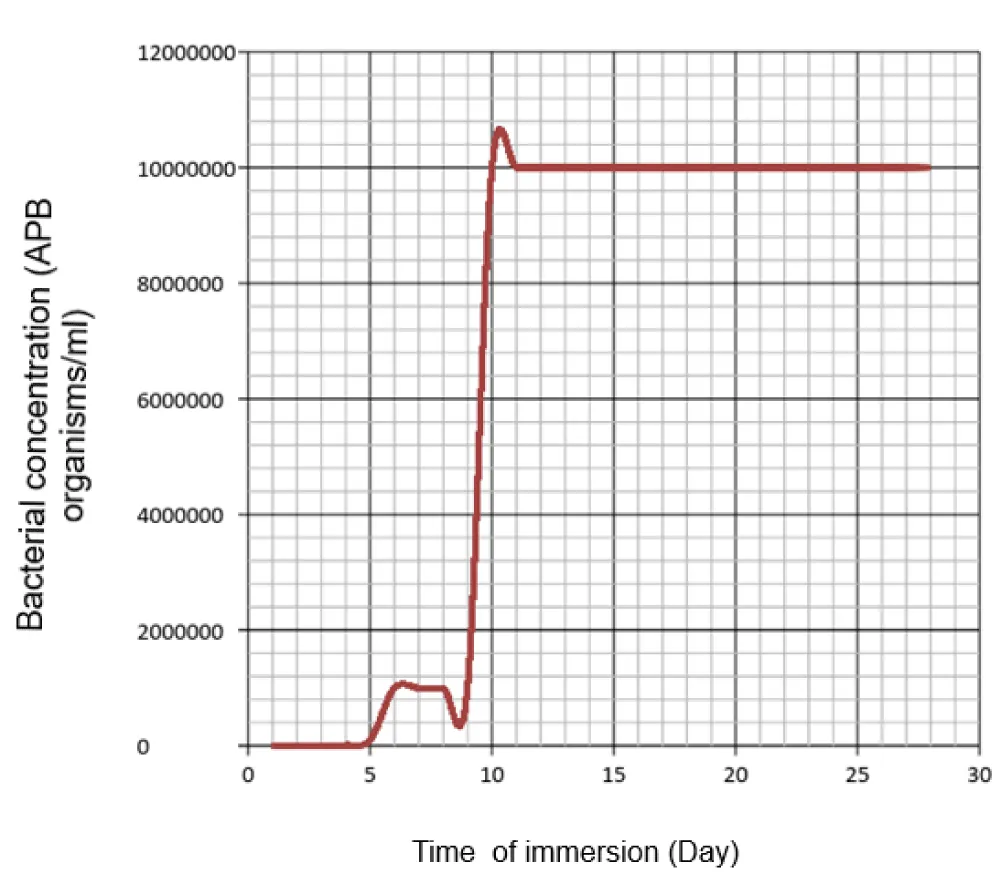
Upon culturing the APB present in the filter deposit, the resulting curve resembles a bacterial growth curve exhibiting the characteristic phases:
- A lag phase, corresponding to the time required for the APB to synthesize enzymes adapted to the substrate.
- An exponential phase, representing the number of cells as a function of their growth rate.
In our study, APB contamination reached a concentration of 10⁶ organisms/mL by the 10th day, during the exponential phase.
As growth proceeds, the culture medium becomes depleted of nutrients and enriched with (toxic) metabolic by-products; this marks the onset of the stationary phase.
- The stationary phase: during this phase, the culture medium becomes less favorable for growth. An equilibrium is established between the number of cells produced through multiplication and the number of cells lost through autolysis [4,5].
Reactivation of bacterial strains
A sample of the filter deposit was placed in a test tube containing physiological saline, and the mixture was agitated for one hour to extract the strains present in the deposit.
A 1 mL aliquot of the suspension was then withdrawn and injected into a series of penicillin vials containing a culture medium specific for APB growth.
The release of H2S within the penicillin vials containing the culture medium indicates production of sulfuric acid H2SO4 by bacteria, according to the following mechanism, which is proposed by the Author of the article [F. KHOUKHI]
When oxygen is present in the water used for water flooding at separation facilities, it is utilized by APB bacterial strains in the reaction that produces sulfuric acid; simultaneously, the iron in the pipeline is oxidized, leading to bacterial corrosion.
This involves the complete oxidation of bisulfide ions HS⁻ or hydrogen sulfide (H₂S) by oxygen to yield sulfate (which forms sulfuric acid in highly acidic environments); the balanced equation is
Cathodic reaction: HS⁻ + 2O2 → SO4²⁻ + H⁺.
Anodic reaction: Fe → Fe2+ + 2 e-
In strongly acidic conditions, these ions combine to form sulfuric acid: SO₄²⁻ + 2H⁺ → H2SO4.
Thus, the appearance or color change from red to yellow during incubation indicates the presence of APB in the deposit collected from the filter of the water separation unit at the southern Algerian oilfield.
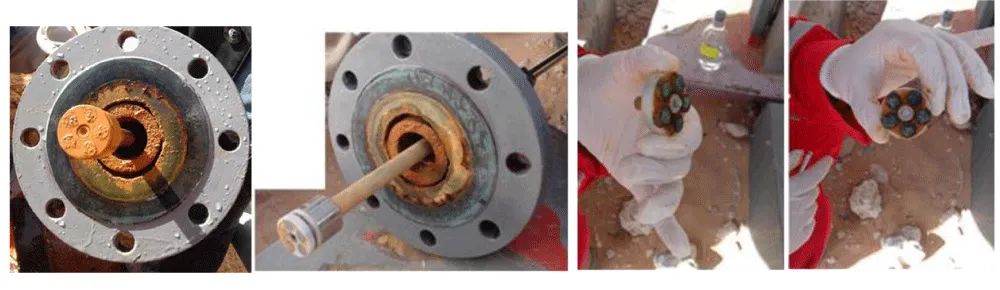
Reactivating the new APB strains provided us with cultures for evaluating the corrosion rate via weight loss (Figure 3).
Analysis of the electrolyte (injection water)
Injection water serves as a habitat for various microorganisms; to determine the concentration of the different mineral elements present in this water, a physicochemical analysis was conducted at the water treatment laboratory at the Algerian Oil and Gas Company.
Physicochemical analysis of injection water
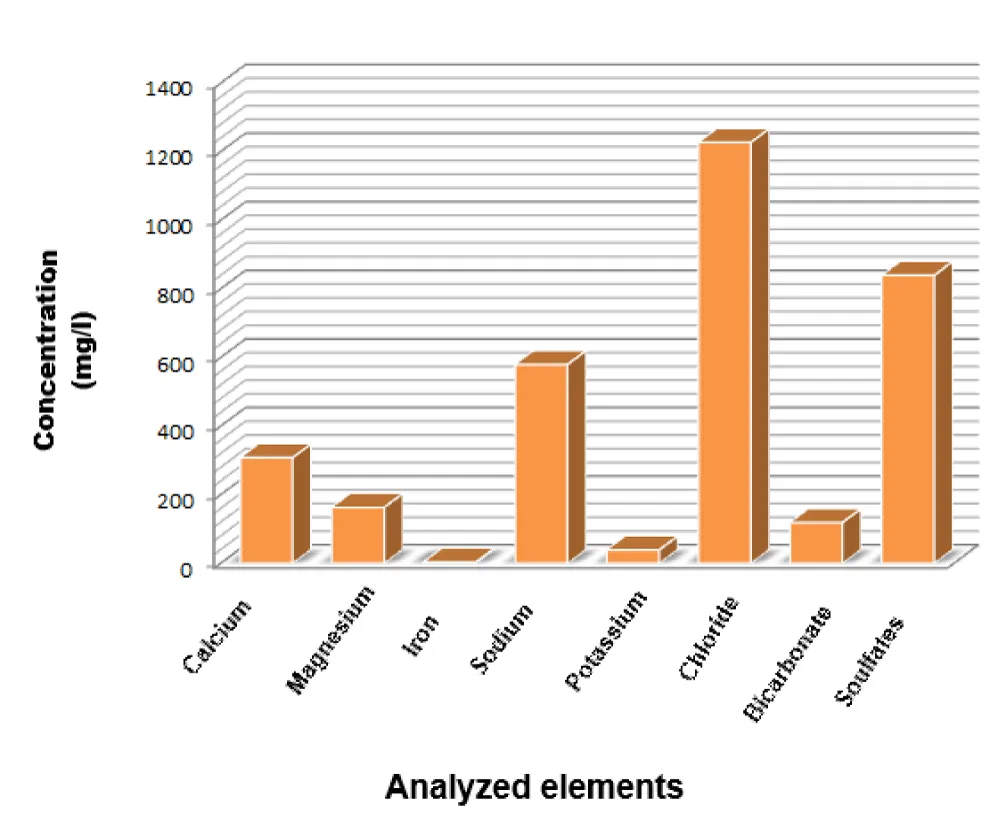
The physicochemical analyses of the injection water sample from the South Algeria Oil Field are presented in Table 3 and Figure 4.
The validity of the analysis results was verified by calculating ion balances using the following formula.
The analysis is of good quality if the balance is 5% or less; a balance of 10% is acceptable [6].
Ion balance (%) = 1,19 %
Therefore, the results are acceptable because the ion balance is less than 5%.
Influence of injection water chemical composition on APB growth
Several authors have noted the influence of physicochemical parameters on bacterial development; bacterial growth depends on the medium's chemical composition, physicochemical conditions, and the specific nutrients present.
- pH
The injection water has a neutral pH (pH = 7.23); at this pH, APB tends to tolerate and/or metabolize the organic or inorganic acids present in the medium. These results align with those obtained by other authors, who observed the presence of APB in water rich in sulfates and carbonates with a pH between 6.50 and 8.50 [5].
- Salinity
Mineral salt analysis shows that the injection water is saline, which favors the development of most APB strains [7].
- Na+ and Cl-
Based on the analysis results, the injection water contains a very high concentration of Na+ and Cl- ions, which are essential for regulating osmotic pressure (NaCl content).
- Ca2+ and Mg2+
Significant concentrations of Ca2+ and Mg2+ ions are observed; Ca2+ ions promote bacterial uptake, whereas Mg2+ ions facilitate the reduction of sulfates to sulfides.
- Fe2+
We observe a very low iron concentration in this water; in fact, the iron present originates from metal dissolution. This element acts as an enzymatic factor; it is a structural component of hydrogenase, a key enzyme in the production of acid by APB [7].
- SO42-
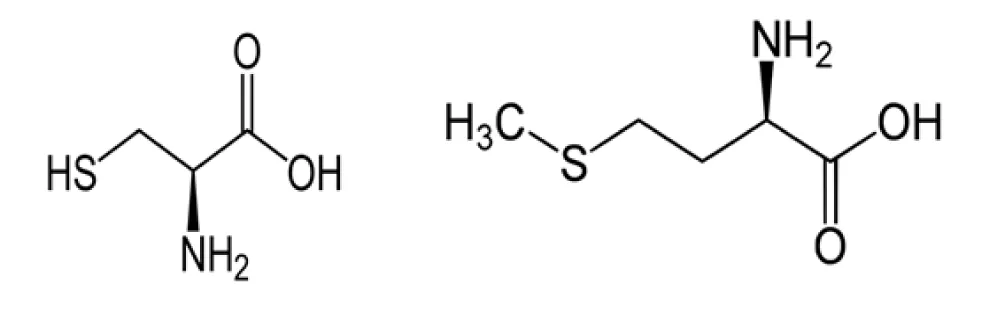
We found a high concentration of sulfate ions in this water. These are essential for APB growth, acting as electron acceptors. Furthermore, sulfates serve as a sulfur source for APB and are incorporated into two amino acids -cysteine and methionine - which are involved in protein structure [8] (Figure 5).
Corrosion rate evaluation using the weight-loss method
After the steel coupons had been exposed to an electrolyte contaminated with APB, they were removed, cleaned, dried, and weighed in accordance with the standard procedure (NACE SP0775-2023 – Corrosion Coupons Installation and Handling) [9].
Coupons immersed in a contaminated, chemically untreated medium
The immersion time of carbon steel in an APB-contaminated solution affects corrosion parameters such as the corrosion rate Table 4.
Consequently, the corrosion rate increases over time and the steel’s resistance decreases; the presence of sulfides reacting with the iron in the iron-carbon alloy causes a loss of metal weight (Figure 6).
In the laboratory, Corrosion Coupons immersed in a contaminated medium and treated with various biocide concentrations
Biocide Efficiency Equation:
Efficiency (%) = [CRBiocide-free control blank– CRBiocide] / CRBiocide-free control blank* 100
CR: Corrosion Rate (mm/year)
Table 5. Evaluation of corrosion rate as a function of biocide concentration in injection water incubated for 28 days.
Wi: initial weight of corrosion coupon
Wf: Final weight of corrosion coupon
Based on the results shown in the table above, we observe the following:
Following treatment with various concentrations of the biocide, the corrosion rate determined via the weight-loss method decreases as the dosage in the medium increases;
This result indicates the biocide's effectiveness and highlights the necessity of treatment to halt biocorrosion.
Furthermore, the biocide must be broad-spectrum to inhibit the metabolism of sessile bacteria adhering to the metal surface and to kill planktonic bacteria present in the water [10,11].
It must also be multifunctional, acting as both a film-forming and a neutralizing agent to prevent acid corrosion of the pipeline caused by pH changes resulting from acid production by acid-producing bacteria (APB).
Finally, the biocide must act rapidly to halt corrosion during the exponential phase of bacterial proliferation (observed at the 7-day mark).
Scanning Electron Microscopy (SEM)
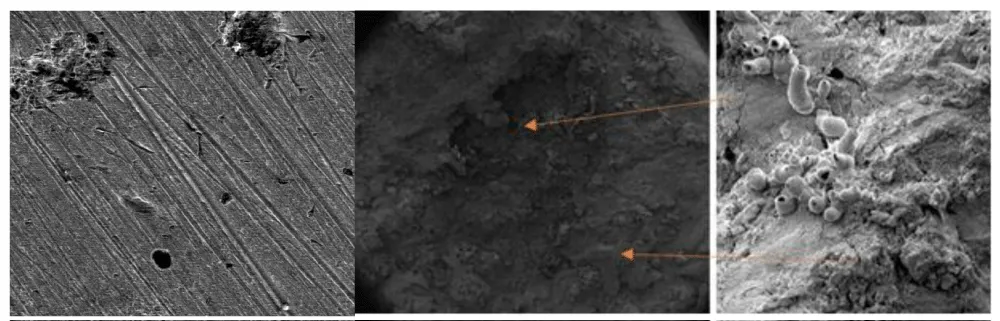
SEM observation of the steel coupons revealed further details; as shown in Figure 7, a biofilm formed by acid-producing bacteria (APB) covers the steel surface, comprising bacterial metabolic products accumulated over 45 days of immersion, which induced pitting corrosion in localized areas, clearly visible in the SEM images.
Conclusion
The study found that acid-producing bacteria from the water injection facilities can speed up the corrosion of carbon steel by forming biofilm and producing acid. The chemical properties of the injection water encouraged bacterial growth, which increased corrosion rates over time. Weight loss tests and SEM studies confirmed that localized corrosion occurred due to the acid-producing bacteria. The corrosion rates dropped significantly with higher biocide concentrations, and the best results came from using 300 to 350 ppm. These findings emphasize the importance of ongoing microbiological monitoring and tailored biocide treatment to protect oilfield water injection systems from microbiologically influenced corrosion.
- ASTM International. ASTM D3370-2018: Standard practices for sampling water from flowing process streams. West Conshohocken (PA): ASTM International; 2018. Available from: https://standards.iteh.ai/catalog/standards/astm/f6804d33-2699-4e4d-88ef-d5f3b9bfa800/astm-d3370-18?srsltid=AfmBOorj-vwlmMEAxLWLXHSj_oQaDwNNstSlUuApdb28XYIo7_yAldYZ
- NACE International. TM0194-2022: Field monitoring of bacterial growth in oil and gas systems. Houston (TX): NACE International; 2022.
- NACE International. TM0173-2025: Standard test method—Methods for determining quality of subsurface injection water using membrane filters. Houston (TX): NACE International; 2025.
- Willey JM, Sherwood LM, Woolverton CJ. Microbiology. New York (NY): McGraw-Hill Education; 2017. p. 17.
- International Organization for Standardization. ISO 10523: Water quality—Determination of pH. Geneva (Switzerland): ISO; 2008. Available from: https://www.iso.org/standard/51994.html
- Rodier J. Water analysis. Paris (France): Dunod; 1975. p. 35.
- Khoukhi F. Contribution to the study of biotechnological control techniques applied against biocorrosion in oil installations. Algae. 2021;21:1-2. Available from: https://dspace.univ-boumerdes.dz/items/04e992e3-1f54-4a06-80df-7f4f88ed066b/full
- Sokatch JR, Ornston LN. The bacteria: a treatise on structure and function. Vol. 12, Bacterial energetics. San Diego (CA): Academic Press; 1990. p. 87-100.
- NACE International. SP0775-2023: Preparation, installation, analysis, and interpretation of corrosion coupons in hydrocarbon operations. Houston (TX): NACE International; 2023. Available from: https://standards.globalspec.com/std/14593337/ampp-sp0775
- Alasri A, Roques C, Miche G, Cabassud C, Aptel P. Bactericidal properties. Can J Microbiol. 1992:635-642. Available from: https://doi.org/10.1139/m92-104
- Waites MJ, Morgan NL, Rockey JS, Higton G. Industrial microbiology: an introduction. 2nd ed. Chichester (UK): Wiley-Blackwell; 2017.


 Save to Mendeley
Article Alerts
Subscribe to our articles alerts and stay tuned.
 This work is licensed under a Creative Commons Attribution 4.0 International License.